
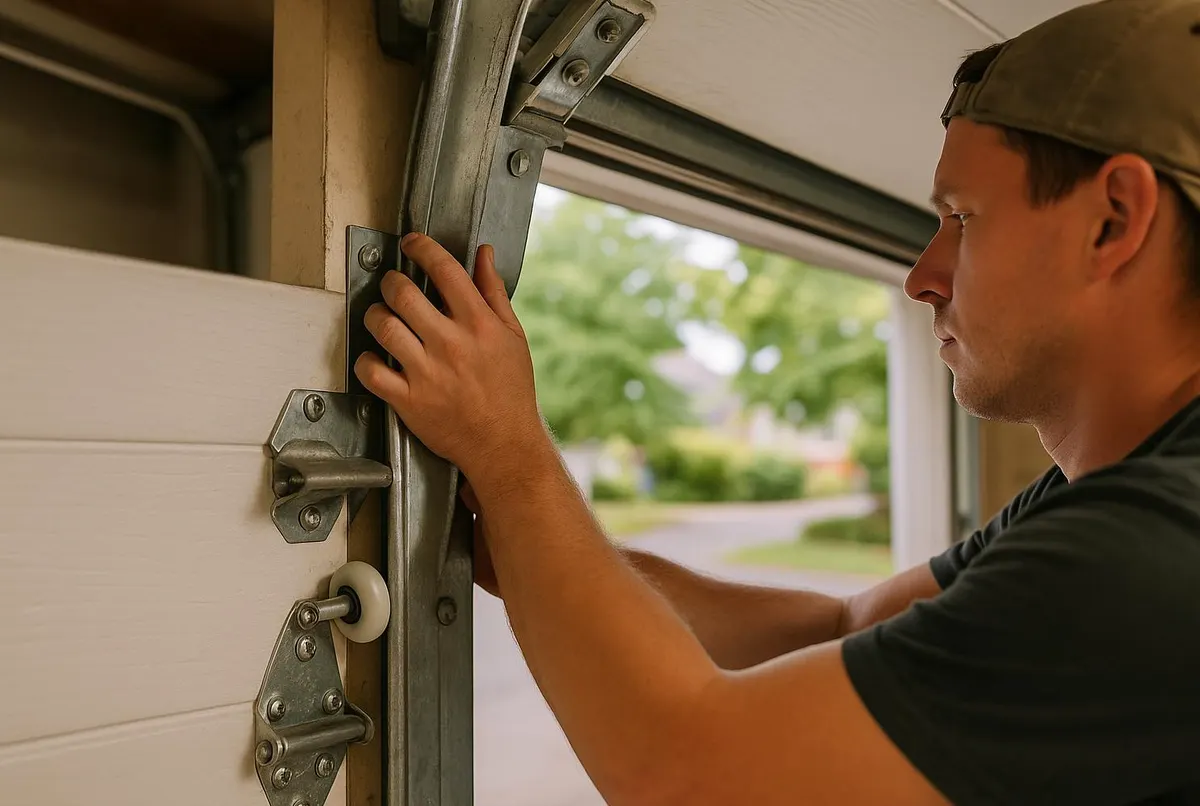
What a Technician Sees on This Call
This is one of the most common service calls this time of year. A homeowner says the door starts down, drops a few inches, then reverses back up on its own. Or it won't move downward at all, and the opener light blinks a few times before going quiet. Sometimes it closes fine one day and refuses the next, with no obvious change. By the time a technician gets there, the owner has usually tried the remote, the wall button, and unplugging the opener, with no luck.
The good news is that this problem almost always traces back to one of a handful of causes, and a technician checks them in a specific order because the most common culprits are also the fastest to rule out. Before assuming it's a major repair, it helps to know what that order looks like.
The Symptoms, and What They're Telling You
- Door reverses before touching the floor: Usually a sign the opener's safety sensors think something is in the way, even when nothing is.
- Door touches the floor, then bounces back up: Often a limit setting issue, or a spring that's no longer supporting the door's weight correctly.
- Door won't move downward at all, opener hums or clicks: Points toward a blocked sensor beam, a bad connection, or in some cases a spring that's already failed.
- Opener light blinks a set number of times when you try to close: Many openers use blink codes to flag a sensor fault specifically. Check your owner's manual or the label inside the opener housing.
1. Safety Sensors (Photo Eyes)
This is the first thing any technician checks, because it's the most common cause and the easiest to fix. The two small sensors mounted a few inches off the floor on either side of the door need a clear, aligned line of sight to each other. If that beam is broken or misaligned, the opener assumes something is in the door's path and refuses to close, or reverses the second it senses the obstruction.
In this area, fall is prime time for sensor trouble. Cooler nights after humid summer days create condensation on the sensor lenses, and falling leaves and blowing debris settle right at that low height along the track. Spiders also like to build webs across the sensor path in garages that sit quiet for a few days. The fix is usually simple: wipe both lenses clean, check that the small indicator lights on each sensor are solid (not blinking), and nudge the sensors until they line up. If one sensor has been bumped out of alignment, by a parked bike, a stored ladder, or just years of vibration, it may need to be loosened and re-aimed.
2. Sensor Wiring
If the sensors look aligned and clean but the problem persists, the next check is the wiring running from each sensor back to the opener. In older homes with original garage wiring, this wire often runs along the floor or is tacked loosely to the wall, where it's vulnerable to being nicked by stored items, chewed by rodents seeking shelter from the cold, or corroded at the connection points from humidity. A technician checks continuity at each connection and repairs or replaces damaged runs.
3. Track Obstructions and Alignment
Next comes a physical inspection of the track itself. Even a small obstruction, a pebble, a chunk of ice, a buildup of hardened road salt tracked in on tires, can cause a roller to bind and trigger the opener's auto-reverse feature. On older doors, tracks can also be slightly bent or no longer perfectly parallel, which becomes more noticeable as freeze-thaw cycles shift a home's slab or foundation slightly over the years. A technician checks for daylight gaps, worn rollers, and loose track brackets, and will adjust or replace hardware as needed.
4. Opener Limit and Force Settings
If the door touches the floor and bounces back, the issue often isn't the sensors at all, it's the opener's limit setting, which tells the motor how far to travel before stopping, and the force setting, which tells it how much resistance to tolerate before reversing. These settings can drift over time, and a door that's become slightly heavier to move (common when original hardware ages or lubrication thickens in cold weather) can trip the force threshold before it finishes closing. Recalibrating these settings takes a technician a few minutes, but doing it wrong can mask a bigger problem, so it's worth having it checked rather than guessed at.
5. Springs and Cables
If the door won't move downward at all, or moves with a visible struggle, worn torsion or extension springs are a likely cause. Springs lose tension gradually, and a door that's borderline can seem fine in summer but fail to close properly once cold weather adds extra resistance to the mechanism. This is also one of the few causes on this list that isn't safe to diagnose or fix yourself, springs are under heavy tension and require the right tools and experience.
6. The Opener Itself
Last on the list is the opener's logic board. If every mechanical and sensor-related cause has been ruled out, an aging or failing circuit board can misread signals and trigger false reversals. This is less common than the causes above, but it does happen, especially in openers original to a home's construction.
When to Call Palmer Garage Door
If you've checked the sensors and the door still won't close reliably, or if you suspect a spring issue because the door feels heavy or uneven, it's time to call in a technician. Palmer Garage Door handles both diagnostic visits for reversing or non-closing doors and full spring replacement when that's the root cause. A technician will test the sensors, check force settings, inspect the springs and cables, and walk you through exactly what's needed before any work begins.
If your garage door in Palmer, Monson, Ware, Belchertown, Ludlow, Three Rivers, Bondsville, or Warren is reversing, sticking, or refusing to close as winter approaches, call Palmer Garage Door for fast, honest service before the weather makes it worse.